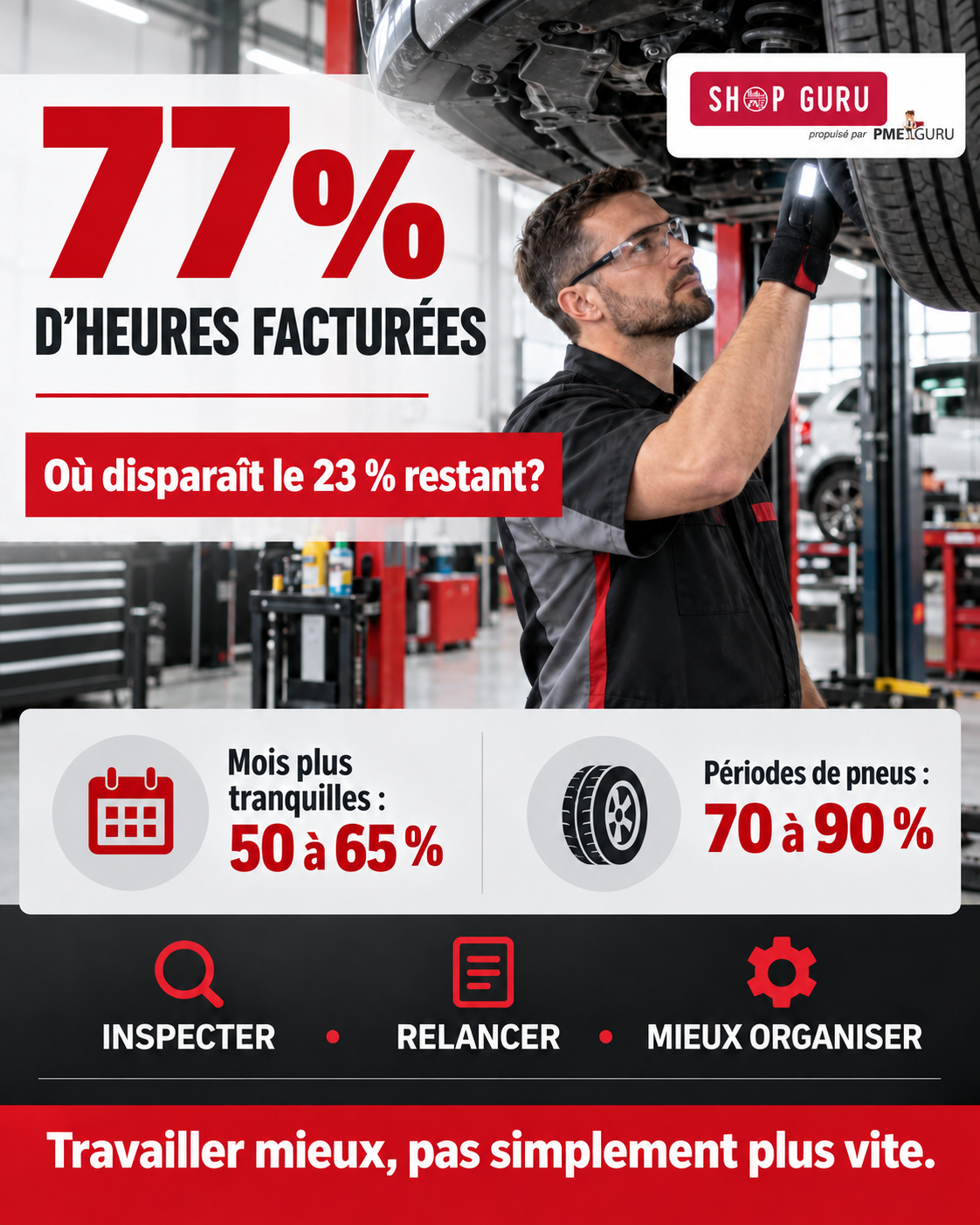
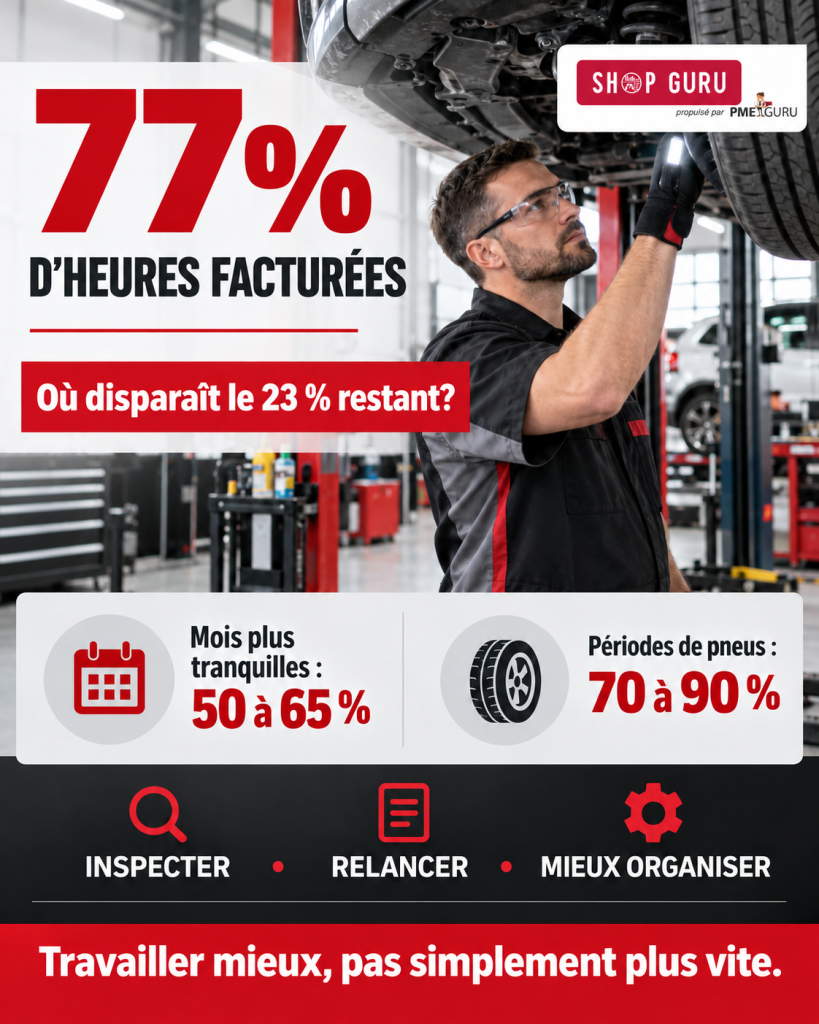
An automotive repair shop’s efficiency isn’t measured solely by how quickly work is completed or by the number of vehicles coming through its doors. Above all, it depends on the shop’s ability to turn available labour hours into billed hours while maintaining a consistent, high-quality customer experience.
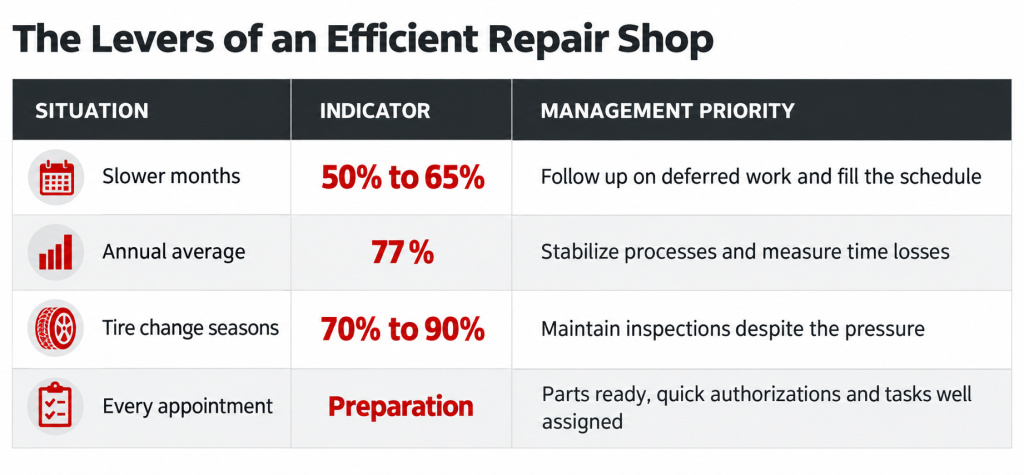
Results, however, vary by season. During slower months, this percentage generally ranges from 50% to 65%. During tire change season, it can climb to 70% to 90%, thanks to the increased volume of customers, appointments, and invoices. This increase is positive, but it raises an important question: when the shop is operating at full capacity, are we working too quickly to properly serve every customer?
Vehicle Inspections: An Often-Overlooked Opportunity
Under pressure, a complete vehicle inspection is often one of the first things to be overlooked. Yet inspections help identify necessary work, inform customers, plan future repairs and improve safety. A thorough inspection is not about selling at all costs; it is about providing transparent advice and building a lasting relationship with the customer.
Deferred recommendations and structured follow-up then become essential during slower periods. They make it possible to remind customers about priority repairs, better distribute demand throughout the year and bill a greater proportion of the hours paid to technicians.
Organization: The Key to Sustainable Efficiency
The real challenge of efficiency lies in organization. Appointments need to be properly prepared for, parts ordered in advance, tasks assigned according to technicians’ skills, authorization delays minimized, and communication between the front counter and the shop kept flowing smoothly. In many cases, lost time comes more from processes than from the technicians themselves. An efficient shop isn’t simply about working faster; it creates the right conditions to work better, all year long.
This discipline improves profitability while contributing to a more stable team.