As the automotive industry continues its push toward “zero collisions,” Advanced Driver Assistance Systems (ADAS) have become one of the most significant technological pillars of modern vehicles.
Their mission is clear: assist drivers, prevent accidents, and reduce serious injuries. But behind this promise lies a complex system in which cameras, radars, algorithms, and calibrations must work in perfect harmony.
For collision repair shops, which are now well acquainted with these systems, the challenge is shifting. It is no longer simply a matter of knowing when calibration is required, but rather of integrating it efficiently into the entire repair process.
Anticipate Rather Than Calibrate at the End
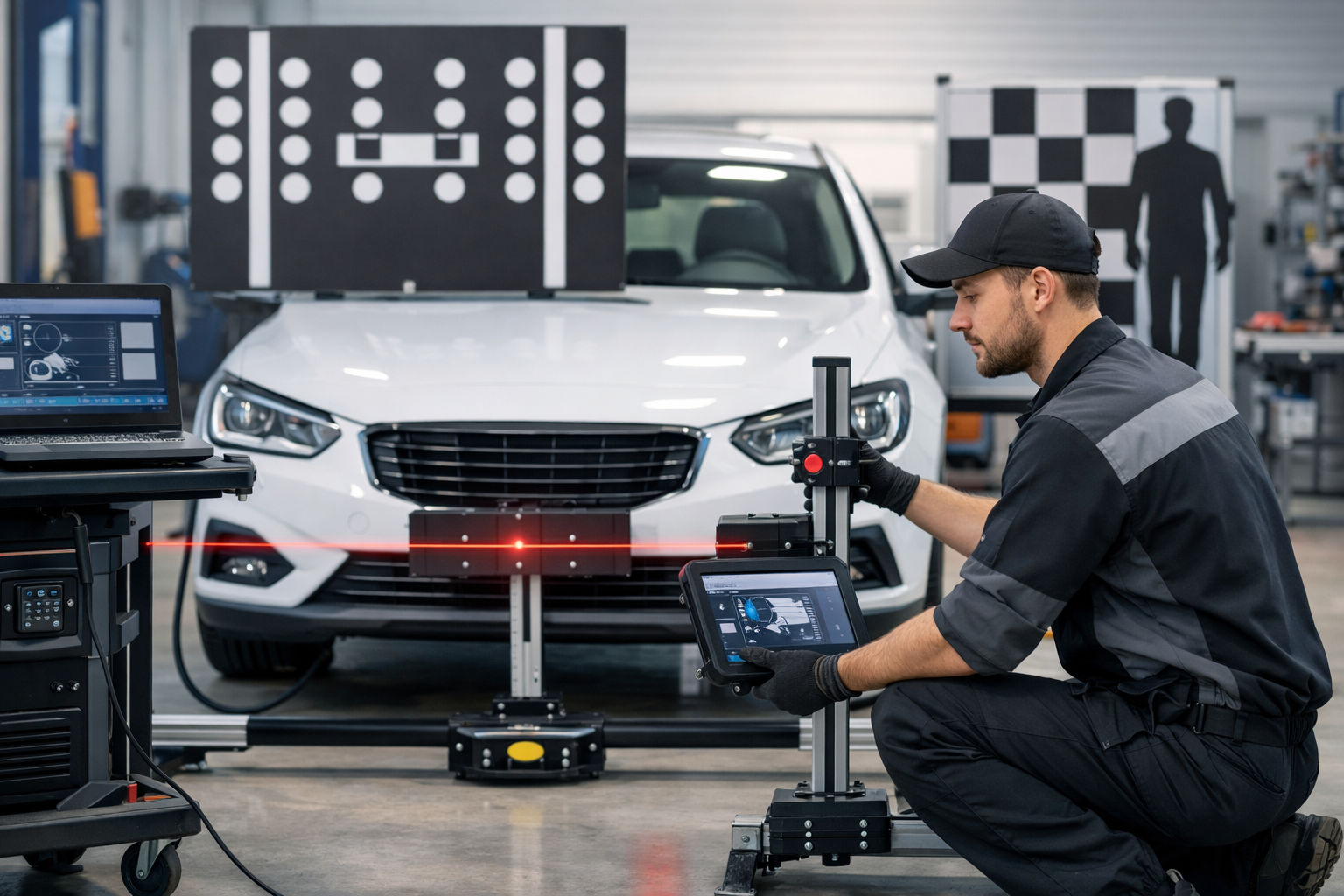
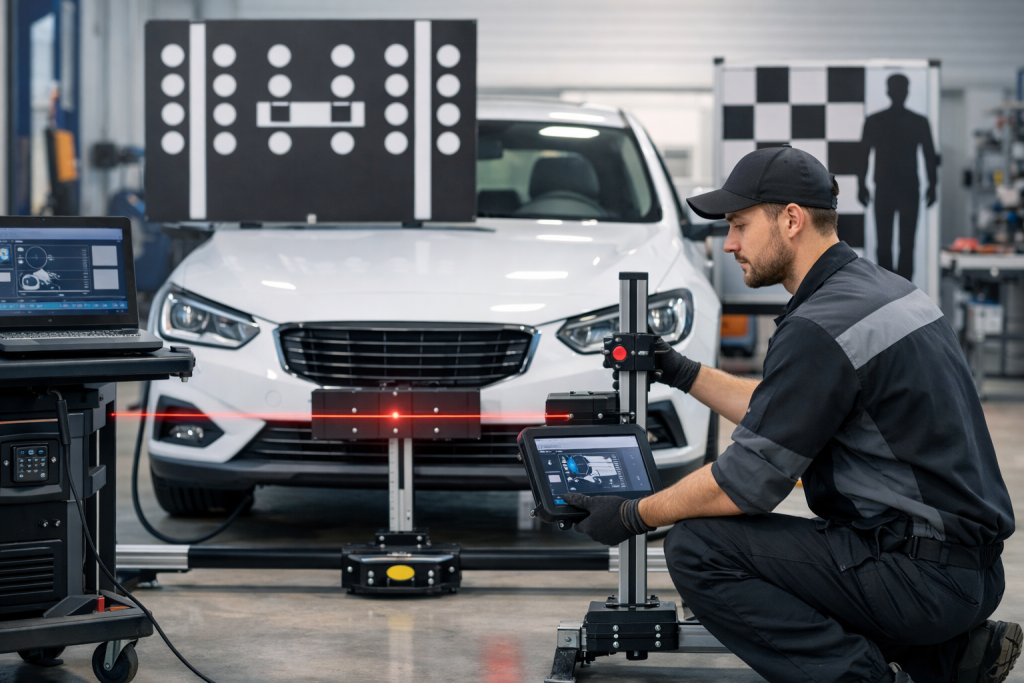
A windshield replacement, body repair, or certain work involving the suspension, steering, or wheel alignment may require a dynamic calibration—performed on the road—a static calibration in a controlled environment, or a combination of both.
Identifying this requirement at the estimating stage makes it easier to plan the repair. Conversely, discovering that a calibration is required when the vehicle is nearly ready for delivery can unnecessarily extend the repair cycle.
Calibration should, therefore, not be viewed as the final step of a repair, but as an operation that must be planned from the outset.
A Potential Bottleneck
This becomes particularly important when calibrations are outsourced. The service provider’s availability, vehicle transportation, and appointment coordination can directly affect the delivery timeline.
Even when calibration is performed in-house, certain conditions must be met. The condition of the vehicle, wheel alignment, tire pressure, available space, or manufacturer-specific requirements can prevent or delay a calibration.
A procedure that fails or must be repeated represents unproductive time and can keep a vehicle in the shop even though it appeared ready for delivery.
Capturing All the Work Performed
ADAS management also involves a financial consideration. The calibration itself is only one part of the process. Researching OEM procedures, preparing the vehicle, meeting prerequisites, conducting road tests, and completing documentation also require resources.
When necessary, these operations should be identified, documented, and incorporated into the estimate.
As vehicles become increasingly intelligent, calibration accuracy remains essential. But for collision repair managers, another form of accuracy is becoming just as important: ensuring that every calibration is anticipated, planned, documented, and fully integrated into the repair process.