
An uncomfortable question
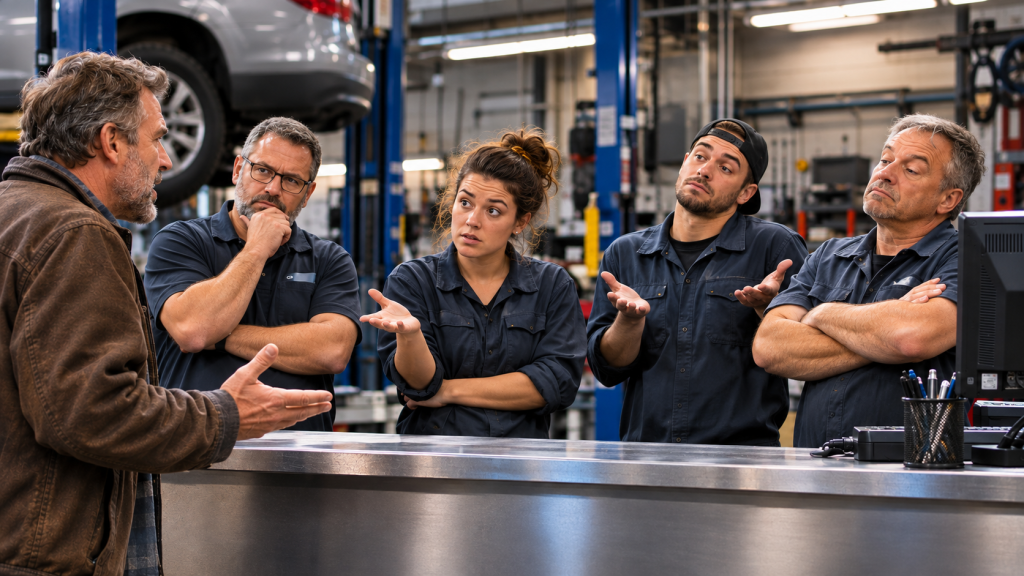
A vehicle returns to the shop. The repair has failed, the customer is unhappy, and the promised deadline has long since passed. Around the service counter, everyone has an explanation: the part, the supplier, the schedule, or a coworker. Yet no one simply says, “That was my mistake.” In an industry where technology is constantly evolving, skilled labour is increasingly scarce, and every repair directly affects road users’ safety, this lack of accountability comes at a high cost.
A cultural shift
There was a time when admitting a mistake was a sign of maturity. We learned from our mistakes, and humility was part of the trade. Gradually, “You’re right” gave way to “It’s not my fault!” This shift is more than just a matter of attitude: it hinders learning, undermines trust, and damages the shop’s reputation.
Treat the cause, not the symptom
When faced with a problem, it is tempting to quickly fix what is visible. It is like taking a painkiller for a recurring headache: you gain a few hours of relief, but the underlying problem remains. Until the root cause is identified, the same mistake will happen again.
Five ways to take action
Accountability cannot simply be imposed; it must be built. The goal is not to find someone to blame, but to empower everyone to take ownership of their role:
- Clearly define responsibilities. A clear service protocol eliminates grey areas where responsibilities can become blurred.
- Communicate expectations. People cannot be held accountable for what they do not know. Expectations must be clearly communicated, understood, and shared.
- Analyze without blaming. Looking for the root cause rather than someone to blame helps improve processes and provides valuable learning opportunities.
- Invest in training. A well-trained technician can take full ownership of their work. Competence lays the foundation for accountability.
- Lead by example. When managers acknowledge their own mistakes, the entire team follows their lead.
In closing
Accountability is not lost; it simply needs to be brought back to the heart of our repair shops. From shop owners to technicians, taking responsibility for our actions means protecting our customers’ safety, the credibility of our profession, and the future of our industry.