
By Michael Hlista
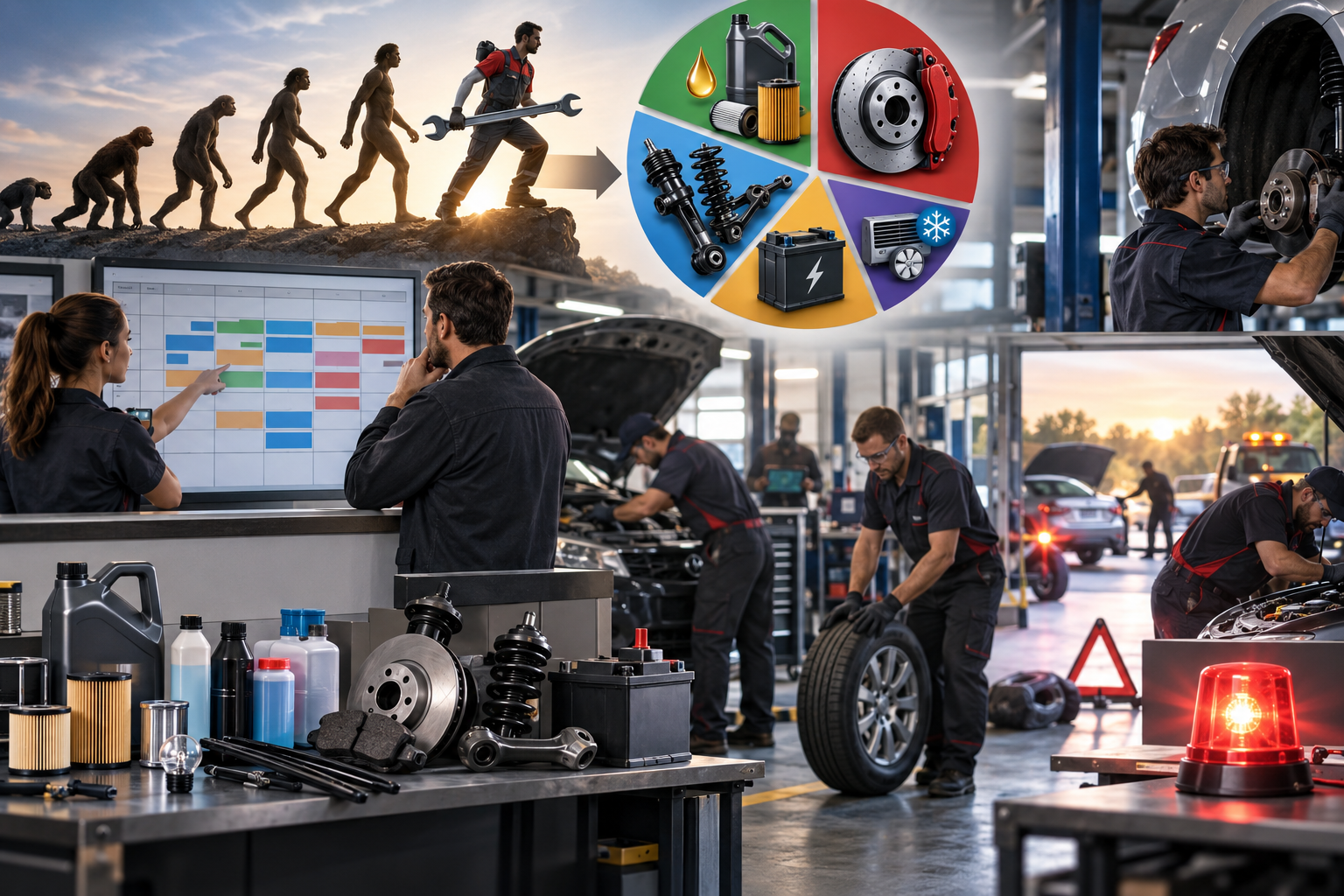
With more than four decades in the collision repair industry, Stuart Klein, Vice President, Collision Programs, at AIA Canada and Executive Director of I-CAR Canada, has seen the job change from one generation of vehicles to the next. He has also seen the business and technicians evolve from near self-taught car mechanics of the past, to highly skilled technicians and estimators who understand OEM procedures, safety systems, software, and the latest repair methods.
Since 1979, I-CAR programs have been covering the fundamentals of collision repair, and its courses are developed with OEMs and the collision repair industry. It also reviews partner courses to ensure training meets a common benchmark. “In a broader sense, I-CAR is both the standard and a standardizer,” says Klein.
Need for Constant Program Evolution
As vehicles change, training is changing as well. With the shift to EVs, I-CAR launched its five-day, hands-on EV training program. The course covers topics ranging from basic electronics to high-voltage shutdown procedures and battery systems, and thirteen OEMs have endorsed the program.
“Even shops that do not plan to repair EVs need to understand how to handle them safely. A damaged EV can arrive at a shop unexpectedly, requiring technicians to understand issues such as high-voltage systems, battery hazards, and vehicle-specific shutdown procedures,” says Klein.
I-CAR also offers online Advanced Driver Assistance Systems (ADAS) training covering the fundamentals. “Technicians need to understand how their work can affect a vehicle’s calibration, while estimators need to identify calibration requirements early in the repair process,” says Klein.
New Subscription Program
I-CAR training is available online and through hands-on courses, and it’s now more accessible through a new online subscription training program where technicians can access more than 270 online courses on demand. Klein says this can be particularly useful for training estimators, whose jobs increasingly require software skills, communication, and the ability to work with OEM procedures.
Looking ahead, I-CAR Canada is working to improve access to its welding training, particularly in remote areas. Klein also sees potential for bringing more hands-on ADAS training to Canada.
For Klein, the challenge is not simply learning new skills but keeping those skills current. “Not only do we have to learn, but sometimes we must unlearn skills and procedures that may have become obsolete as car technologies evolve,” he says. In an industry where change is the name of the game, training is not a finish line—it is a continuing part of the job.