By the Automotive Industries Association of Canada
In a collision repair sector where change is no longer cyclical but constant, the importance of attending industry conferences has intensified. Every month brings new variables: evolving original equipment manufacturer (OEM) repair procedures, increasingly complex advanced driver assistance systems (ADAS) calibrations, updated insurer performance expectations, and shifting labour realities that affect both shop productivity and customer experience.
These pressures do not exist in isolation; they interact, overlap, and compound. As a result, leaders across the sector need forums where they can step away from day-to-day demands and engage with peers who understand the realities of modern repair operations.
Within the current industry environment, connecting with fellow key industry stakeholders carries strategic weight. A conversation between shop owners often reveals how others are handling challenges such as integrating calibration workflows, shortening key-to-key times, or adapting to insurer guidelines. Exchanges with insurers bring visibility into how they are adjusting to rising severity, supply chain delays, or new customer service models.
Equipment suppliers, software providers, and original equipment manufacturer (OEM) representatives add another layer, offering insight into technology shifts that will influence repairability and investment planning. These discussions are not surface-level—they provide context, benchmarks, and practical ideas that would not surface without direct engagement across different parts of the industry.
Conferences also offer the advantage of hearing multiple perspectives in one place. For example, when a session explores the impact of advanced materials or artificial intelligence (AI)-driven estimating, attendees can immediately compare how those topics affect shops of different sizes, insurers with different priorities, and suppliers designing tools for tomorrow’s repairs. That type of multi-lens understanding helps professionals make decisions based on the bigger picture rather than a single operational viewpoint.
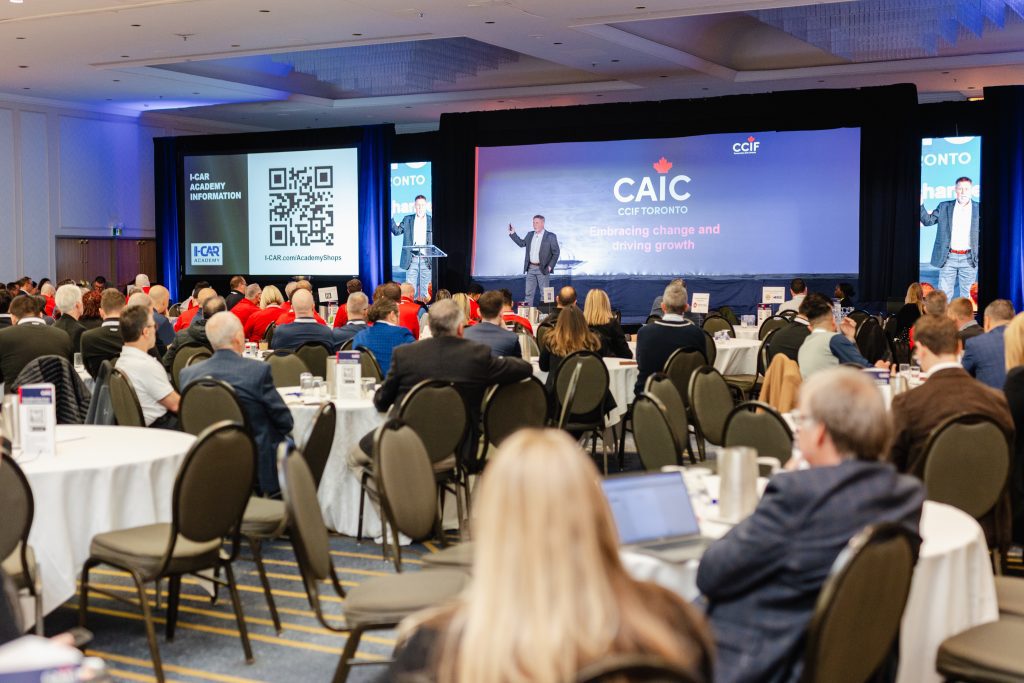
For collision repair professionals who want to navigate today’s complexity with confidence, CCIF Toronto, taking place March 11 and 12, 2026, presents a meaningful opportunity. Attendees can engage with peers who are addressing the same operational and strategic challenges, gain clarity on emerging technologies and industry expectations, and strengthen the relationships that support long-term success. To stay informed, connected, and prepare for what is next in the industry, register at ccif.ca.
Picture credit : AIA Canada