By Charles Aubry
A Decline in Claims Disrupting the Market
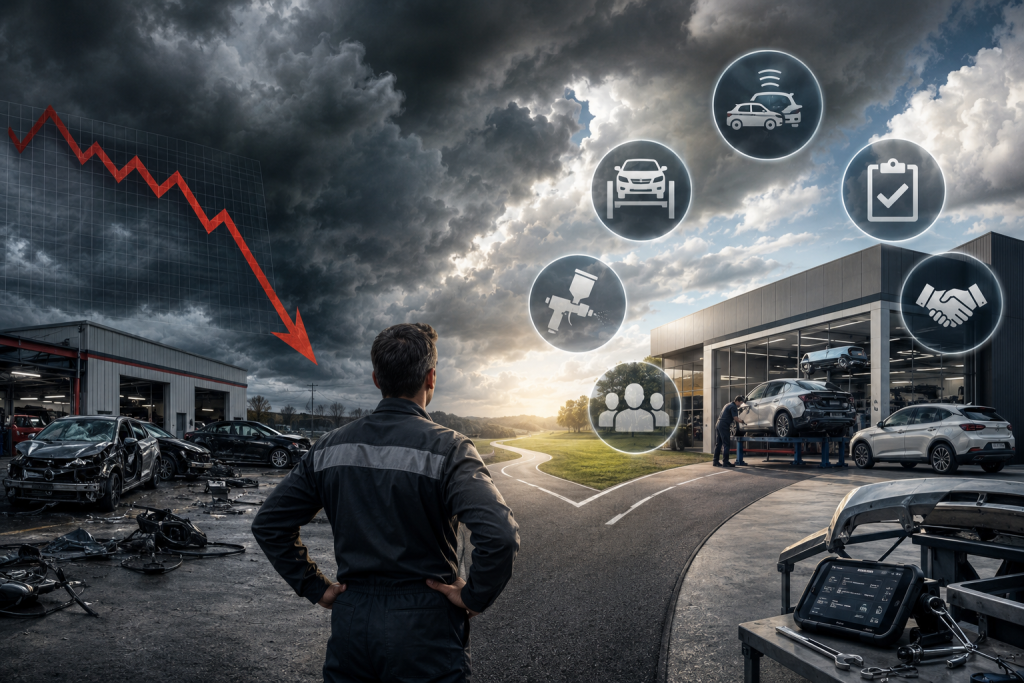
Since the beginning of the year, the collision repair industry has been experiencing an unprecedented period of turbulence. The significant decline in insurance claims observed since February is disrupting the economic balance of many businesses and forcing the industry to rethink its strategies.
Traditionally, insurance-related repairs have been the primary economic driver for collision repair shops, while also creating opportunities for additional customer-paid work. When fewer accident-damaged vehicles come through the doors, this ripple effect disappears.
Large Collision Centres Turning to New Markets
To maintain their volume, large collision centres are turning to segments they previously overlooked, including dealership warranty work and used vehicle reconditioning.
This shift is placing considerable pressure on smaller shops, which have traditionally relied heavily on these markets to maintain profitability.
A Transformation That Goes Beyond Current Market Conditions
Advanced driver assistance systems (ADAS), collision prevention technologies and changing driving habits are gradually reducing the frequency of accidents.
For several years, the pandemic and supply chain disruptions masked this reality. Today, data indicates an approximately 15% decrease in collisions compared with pre-pandemic levels—a trend that could continue to accelerate.
Consequences Are Already Visible Across Quebec
The effects are already visible throughout Quebec. Some shops are closing their doors, some owners are choosing to sell their properties rather than continue operating, while others are converting their land into real estate developments.
Buckle Up and Adjust Course
Just as a pilot asks passengers to fasten their seat belts before entering an area of turbulence, shop owners and managers must adapt their strategies now.
For many, this will mean specializing in areas such as vehicle restoration, corrosion treatment, fleet management or other niches that can help diversify revenue streams.
For those wishing to remain in modern collision repair, OEM certifications will become an important competitive advantage. In a market where volume is declining and vehicle complexity is increasing, expertise, specialization and quality will be the best tools for ensuring long-term business sustainability.
Those who can anticipate change, adjust course and differentiate themselves will be best positioned to navigate the turbulence ahead.