Renowned for having tire wear 11% slower than the industry average in an ADAC study, Continental aims to continue in this direction and position itself as a leader when it comes to the lifespan of its products.
A Powerful Ally
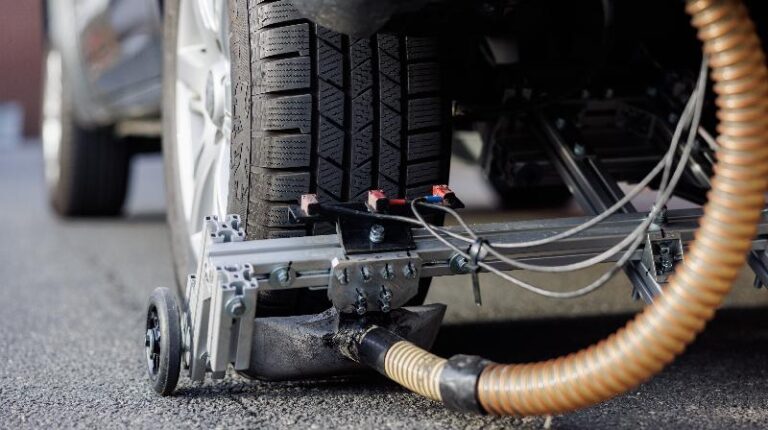
To achieve this, the brand partnered with the Technical University of Braunschweig in Germany to develop a specialized vacuum equipped with sensors capable of detecting the finest particles emitted by tires. Positioned behind it, this vacuum comes from the OLRAP project and allows Continental to improve the design of its tires. Moreover, this analysis technology collects not only tire particles but also brake particles, enabling advancements in brake development as well. The data gathered will help the industry prepare for upcoming regulations, notably the Euro 7 standard, which will set limits on wear emissions starting in 2028.
The Ball Is in Our Court
Thanks to this program, researchers were able to establish a clear link between tire wear, acceleration, speed, and road conditions. They also found that more aggressive driving can have up to three times the impact of the type of tire chosen, demonstrating that the driver has the greatest influence on their tires.
Other Projects for a Greener Planet
In addition to its advanced tire wear research, Continental participates in other environmental initiatives. It co-chairs the Tire Industry Project, which thoroughly studies the environmental impact of tires throughout their lifecycle. It is also the only tire manufacturer involved in the RAU project, an initiative of Germany’s Federal Ministry of Research. This project led to the implementation of a stormwater filtration system that blocks 97% of solid residues, reducing pollutants in runoff water.
Through these numerous projects, Continental is able to develop more durable tires and help make our planet greener.
Photo credit: Continental