By Réjean Lortie
Understanding Where We Came From to Know Where We’re Going
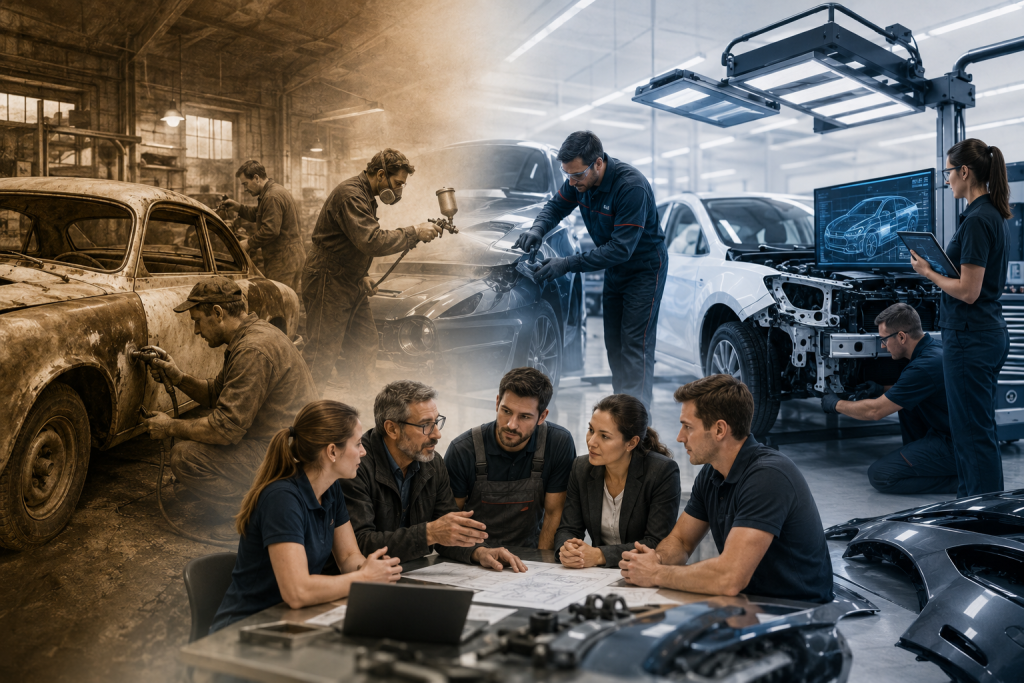
Looking back allows us to appreciate how far our industry has come. For many years, rust dictated much of the work performed in collision repair shops. Sanding, dent repair, surface preparation and painting were part of everyday operations. At that time, customers were free to choose the repair shop they trusted with their vehicle. Over the years, however, the growing influence of insurers in the claims process has gradually changed that dynamic and the way collision repair businesses attract and retain customers.
Back then, some customers even took the opportunity to change their vehicle’s colour while it was being repaired. Collision repair was as much about transformation as it was about restoration, driven by practical skills, craftsmanship and pride in a job well done.
When the Future Depends on It
Since then, the profession has undergone a profound transformation. Materials, repair processes, equipment and customer expectations continue to evolve at a rapid pace.
The arrival of electric vehicles, Advanced Driver Assistance Systems (ADAS) and high-strength materials has fundamentally changed the nature of collision repairs. Paint work has also become significantly more complex, with tri-coat finishes, specialty coatings and new paint formulations requiring a higher level of technical expertise and precision. A repair that once seemed routine can now have a direct impact on the safety of both the vehicle and its occupants.
What was once largely based on experience now requires technical expertise, a thorough understanding of OEM repair procedures and work performed in accordance with the standards expected by insurers.
Adapting to Thrive
Successful repair facilities are those willing to challenge themselves and invest in training and equipment. Adaptability, vision and courage have become essential to remaining relevant and competitive.
Today, a shop’s performance is no longer measured solely by the quality of its repairs. It also depends on its ability to follow OEM procedures, properly document repairs, and maintain a highly skilled workforce.
Resilience Through Change
The challenges have never disappeared: labour shortages, increasing technological complexity, insurer requirements, and major capital investments are all major issues. Yet collision repairers have consistently adapted and continued moving forward.
This ability to evolve has helped make the collision repair industry one of the most structured sectors of the automotive aftermarket. Certifications, specialized training and standardized repair procedures are now at the core of many successful repair facilities.
Stronger Together
No repair shop can face today’s challenges—or tomorrow’s—alone. Performance standards are built through collaboration among shop owners, estimators, technicians, suppliers, trainers and industry partners.
In this environment, collision repairers have become true leaders in establishing industry standards. They do far more than repair vehicles—they help define benchmarks for quality, safety, operational excellence and shop culture.
Image credit: AI-generated