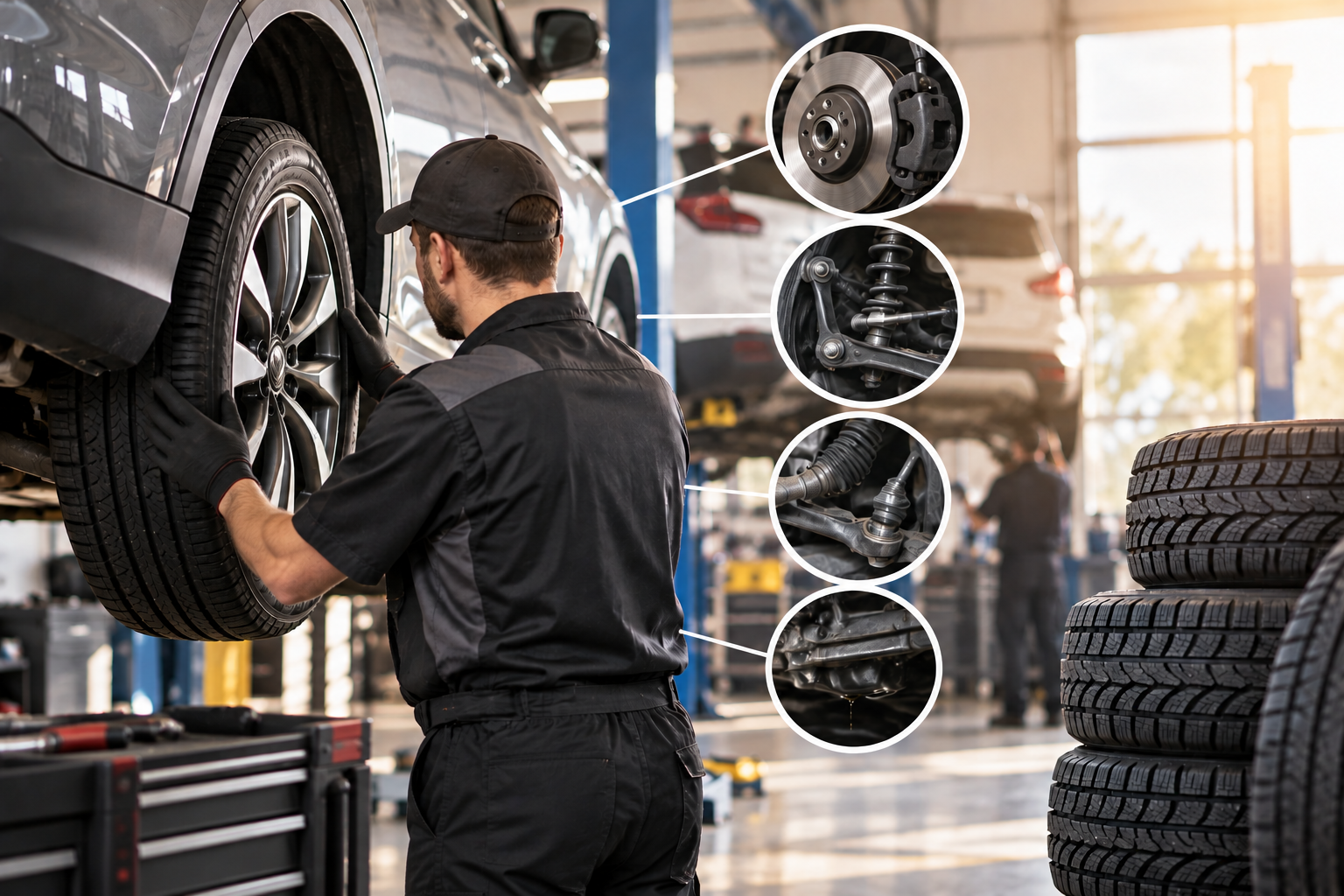

Becoming a journeyman in mechanics or automotive bodywork means embracing a vocation where practical learning and respect for the profession take center stage. This role fits perfectly into the framework of vocational training and skills recognition systems.
The path to becoming a journeyman:
It usually starts with a DVS in automotive mechanics or bodywork, offered in several vocational training centers across the province. After graduation, apprentices must accumulate hours of supervised work to develop their expertise.
To obtain their competency card (journeyman status), the candidate must pass a theoretical exam and a practical exam with a parity committee.
The journeyman is an important pillar in the shop
In an auto repair shop, the journeyman occupies a central place, both as a seasoned technician and as a mentor. They are the person the team relies on to solve complex diagnoses and adapt practices to new technologies (e.g., digital diagnostics, repairs on electric and hybrid vehicles). Thanks to their experience, they guarantee the quality of the interventions by ensuring that apprentices’ decisions are the right ones, while supervising and guiding them.
A valuable middleman
The journeyman also acts as an intermediary between the management and the young recruits, creating a climate of rigor and collaboration. Their presence in the shop guarantees not only that processes are mastered, but also the sustainability of artisanal knowledge in a constantly evolving automotive world.
Even if you already have experience as an automotive technician, the competency card issued by a parity committee acts as a professional passport that formalizes your status and can broaden your horizons. This has many advantages.
Photo par Clarity Coat